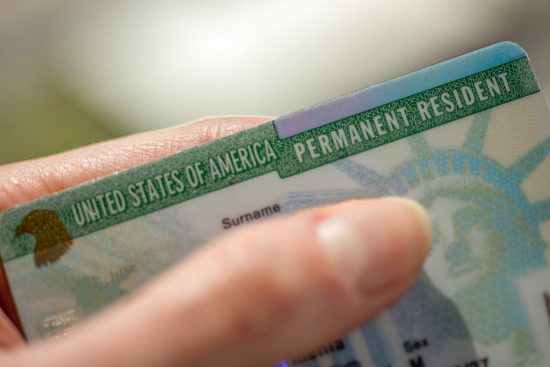
U.S. to Review Social Media and “Anti-American” Attitudes in Visa and Residency Applications
U.S. will review social media and “anti-American” attitudes in visa and residency applicants, sparking criticism over ambiguity.
Posted on 25/08/2025 at 15:42






Publicado el 25/08/2025 a las 15:42
- New Trump immigration policy will review social media.
- USCIS tightens controls over hostile ideologies.
- Criticism of U.S. for ambiguous policy against immigrants.
A tightening of immigration policy.
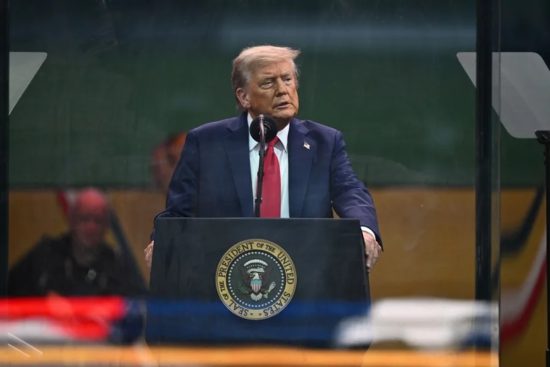
President Donald Trump’s administration announced a new measure that expands controls on those seeking to live or work in the United States.
From now on, applicants will be examined for possible “anti-American” attitudes, which includes reviewing their social media and any background of participation in organizations labeled as hostile.
According to the U.S. Citizenship and Immigration Services (USCIS), the goal is to prevent those who promote ideologies contrary to the country from gaining immigration benefits.
New Trump immigration policy will review social media
The U.S. announced a new policy for those seeking to live or work in the country: it will evaluate possible “anti-American” attitudes. https://t.co/osEVhKYFHQ
— NTN24 (@NTN24) August 20, 2025
Among the criteria mentioned are supporting terrorist organizations, spreading antisemitic messages, or belonging to groups that seek to overthrow the U.S. government.
USCIS spokesperson Matthew Tragesser stated that “the benefits of the United States should not be granted to those who despise the country and promote anti-American ideologies.”
The measure, however, does not clearly define what qualifies as such.
This has generated concern among lawyers and activists.
Ambiguity and fears of abuse
🔴 #International | U.S. will evaluate possible “anti-American” attitudes in visa and residency applicants
U.S. authorities announced on Tuesday, August 20, 2025, that those seeking to live or work in the country will be examined for such positions… pic.twitter.com/81SvdeAl05
— Radio Sucesos Ecuador (@radiosucesosec) August 20, 2025
The announcement raised concerns in immigration forums and on social media. Critics pointed out that the lack of clarity could lead to arbitrary decisions.
Some wondered whether expressing opposition to the war in Gaza, criticizing President Trump, or sharing satire online could be interpreted as “anti-American.”
Aaron Reichlin-Melnick of the American Immigration Council compared the measure to McCarthyism in the 1950s, when people were persecuted for being accused of sympathizing with communism.
Other specialists, such as sociologist Jane Lilly Lopez, warned that the policy opens the door for “stereotypes, prejudices, and implicit biases to dominate immigration decisions.”
Immigration attorneys also noted that the standard is subjective and does not explicitly appear in the Immigration and Nationality Act (INA).
While this law already restricts naturalization for members of communist parties or groups that promote violence against the government, the term “anti-American” had never been used in legislation.
Impact on visas and international students

The announcement adds to other restrictions recently implemented.
The State Department confirmed that in 2025 more than 6,000 student visas have already been revoked, partly due to evaluations of attitudes considered hostile toward U.S. culture, institutions, or founding principles.
Immigrant advocacy organizations warn that these policies could discourage international students, researchers, and highly skilled professionals from applying to programs in the country.
In addition, there is fear that people with critical opinions about government policies will be unfairly punished.
The measure underscores the Trump administration’s restrictive shift in immigration matters, in a political context where national security and cultural identity have become central banners.
Meanwhile, the debate centers on whether the concept of “anti-American” will be applied transparently or will become a tool to further limit immigration.
YOU MAY ALSO BE INTERESTED: USCIS Tightens Review of “Good Moral Character” in Citizenship Applications
 Related post